

In this article: A practical leather sectional sofa buying guide covering configurations, room sizing, leather types, build quality, key features, and placement—so you can choose a sectional that works for your space and holds up over time.
- Sectional Configurations: L-Shape, U-Shape, and Modular
- Sizing and Room Planning
- Leather Types for Sectionals
- Frame and Build Quality
- Features That Add Function
- Placement and Styling
- Frequently Asked Questions
A leather sectional sofa is one of the most significant investments in a living room or media space—it anchors the room's layout, sets the comfort standard, and ideally lasts for years of daily use. Getting the configuration, size, and leather type right before you order prevents the most common and costly regrets: a piece that doesn't fit the room, wears prematurely, or doesn't serve the way you actually use the space.

This guide covers every decision point in buying a leather sectional—from selecting the right shape for your room to evaluating leather quality and understanding what features actually matter.
Quick Takeaways
• L-shape sectionals work in most rooms; U-shape requires a large open floor plan.
Measure twice before ordering—sectionals are difficult to return and nearly impossible to resize after purchase.
• Top grain leather is the practical choice for most sectional buyers.
It delivers consistent appearance across a large piece, resists daily wear in high-contact zones, and is easier to maintain than more natural leathers.
• Modular sectionals offer the most layout flexibility over time.
Pieces can be reconfigured as your room changes, making them a stronger long-term investment if your space or household evolves.
• Frame quality matters more on a sectional than on a standard sofa.
More seats mean more load distribution across more connection points—prioritize kiln-dried hardwood or steel frames with reinforced corners.
• Leave a walkway of at least 30–36 inches around the sectional.
This is the minimum comfortable circulation width for a living space; sectionals that crowd the room make the space feel smaller and harder to use.
1. Sectional Configurations: L-Shape, U-Shape, and Modular

The configuration you choose determines how the sectional interacts with your room—traffic flow, viewing angles, conversation layout, and how the piece ages visually as the room evolves.
L-shape sectional
The L-shape is the most versatile sectional configuration and the most common. It occupies two walls of a room (or sits in the middle of a larger space), offers a clear sight line to a television or focal point, and typically includes either a chaise extension or a corner seat.
• Works in rooms as small as 12 x 12 feet, though 14 x 14 feet or larger is more comfortable
• Positions well in living rooms, great rooms, and home theaters
• Offers clear traffic flow through the room—one open side allows circulation without climbing over furniture
• Available in left-facing and right-facing configurations—confirm which orientation works in your room before ordering
U-shape sectional
U-shape sectionals surround a central open area on three sides. They provide the most seating in a single piece and create a defined, enclosed conversation zone. The tradeoff is that they require significantly more floor space and can feel overpowering in smaller rooms.
• Requires at minimum a 15 x 15 foot open area—most work best in rooms 18 x 18 feet or larger
• Ideal for large family rooms, open-plan spaces, or media rooms where maximum seating per row is a priority
• Can limit traffic flow through the room—plan entry and exit paths carefully
Modular sectional
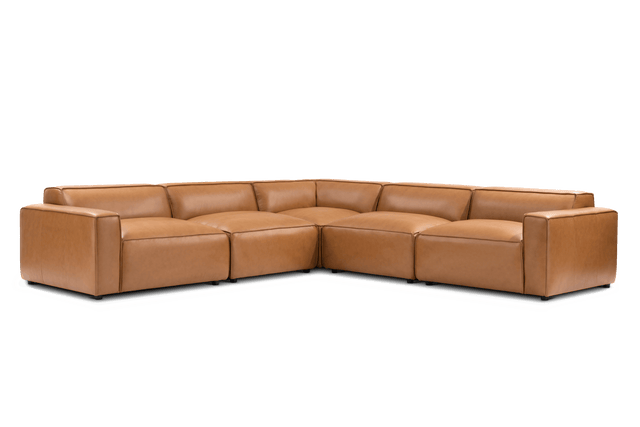
Modular sectionals are made of individual pieces—seats, corner units, armless chairs, and ottomans—that connect and disconnect to form different configurations. They are the most flexible option for households where room layout or seating needs may change over time.
• Can be reconfigured without purchasing new furniture
• More expensive per seat than fixed configurations, but the long-term flexibility has real value
• Check that modular connection hardware (typically metal clips or alignment pins) is robust—loose connections between sections can create gaps or misalignment over time
2. Sizing and Room Planning

Sizing errors are the most common—and most expensive—buying mistake with sectional sofas. A sectional that is too large crowds the room and blocks traffic. One that is too small looks disconnected and undersupports the space. Plan before you order.
Measure the floor plan, not just the sofa
Tape out the sectional's footprint on the floor before ordering. Include the depth of each arm section and the full depth of any chaise or corner extension. Stand in the room and walk the paths you use daily—kitchen to dining area, bedroom hallway, front door. A sectional that feels roomy in a furniture store can feel overwhelming once it's in your home.
Minimum clearance guidelines
• 30–36 inches: minimum comfortable walkway around the sectional
• 18–24 inches: comfortable gap between sectional and coffee table
• 8–10 feet: recommended viewing distance from sectional to a 65-inch television (adjust for screen size)
• 18 inches: minimum clearance to the nearest wall on the open side for comfortable seating access
Account for delivery logistics
Leather sectionals are heavy and rigid. Measure doorways (interior and exterior), hallways, and staircase turns before the delivery date. Confirm with the retailer whether the sectional ships in sections or as a single assembled piece—modular designs are much easier to deliver into tight spaces.
| Configuration | Minimum Room Size | Best For |
|---|---|---|
| L-shape | 12 x 12 ft (14 x 14 ft preferred) | Most rooms; versatile placement |
| U-shape | 15 x 15 ft (18 x 18 ft preferred) | Large open-plan spaces, max seating |
| Modular | Varies by configuration | Changing layouts, flexible households |
3. Leather Types for Sectionals
Leather choice on a sectional carries more weight than on a standard two-seat sofa because the surface area is larger, the number of high-contact zones multiplies with each added seat, and visual consistency across all panels is more noticeable in a large piece.
Top grain leather — the consistent choice
Top grain is real leather with a refined, lightly corrected surface and a protective finish. On a sectional, this finish is a practical asset: it helps the piece maintain a consistent visual appearance across all panels as it ages, and it resists the friction, oils, and daily wear that accumulate at every seat rather than just one or two positions. Top grain is the most common choice for premium sectionals.
Full grain leather — natural character at scale
Full grain leather retains the hide's natural surface, providing the richest long-term patina but also the most visible natural variation—pore patterns, subtle wrinkles, and hide markings. On a sectional with many panels, this natural variation is part of the aesthetic. Choose full grain if you want a piece that develops a lived-in, deeply personal character over time. Look for a semi-aniline or lightly protected finish to help resist oils and surface marks in everyday use.
Ask what's on the high-contact panels
Some sectionals use real leather on visible panels and a matching synthetic on the back and sides. This is common and not inherently a problem—but you should know where the real leather is. Ask specifically what material is used on the seat cushions, armrests, and chaise top, as these are the surfaces your body contacts most often.
What to avoid on a sectional
• Bonded leather: the peeling and flaking that bonded leather is prone to is more visible and harder to manage on a large sectional than on a two-seat sofa. Avoid bonded leather for any sectional intended for daily use.
• Mismatched panel materials without disclosure: some products mix leather and vinyl on the same visible panels. Ask for a clear breakdown of materials before purchasing.
4. Frame and Build Quality
Frame quality is more important on a sectional than on a standard sofa because the load is distributed across more joints, more connection points, and (in reclining configurations) more mechanisms. A sectional that develops looseness, wobble, or misalignment between sections after a few years is difficult and expensive to repair.
Kiln-dried hardwood frames
Kiln-dried hardwood is the preferred wood frame material for premium sectionals. The controlled drying process reduces the wood's moisture content before it's built into the frame, which helps joints remain tight as the sofa acclimates to your home's humidity level. This is especially important in multi-seat sectionals where joint movement in one section can telegraph into misalignment between sections.
Steel frames
Steel frames offer high rigidity and dimensional consistency. They are less susceptible to seasonal expansion and contraction than wood, which can make them a strong choice for sectionals in rooms with variable humidity. Look for quality welds, appropriate steel gauge, and protective coating to prevent corrosion over time.
Corner and joint reinforcement
Reinforced corner blocks, steel brackets, and quality joinery (glue plus screws or dowels, not staples alone) are what keep a sectional from developing the subtle wobble or rack that signals frame fatigue. Ask about reinforcement specifically at the connection points between modular sections and at the legs, which take the most concentrated load.
Seat deck support
The seat deck holds your weight session after session. Look for sinuous springs or eight-way hand-tied spring systems, which distribute weight across the frame more evenly than webbing or flat platforms alone. Cross-bracing under the seat deck helps prevent sagging in the center of the sofa over time.
5. Features That Add Function
Beyond the core construction, several features can significantly improve how a leather sectional performs in daily use. Here are the ones that tend to have the most real-world impact.
Chaise vs standard end seat
A chaise extension provides a full-length lounging surface at one end of the sectional. It is one of the most popular sectional features because it allows a single user to stretch out fully without taking up the rest of the sofa. If you frequently use the sofa for single-person lounging or napping, a chaise end is worth prioritizing.
Reclining seats within a sectional
Reclining sectionals allow individual seat positions to recline independently—most commonly with power controls. This transforms the piece into home theater seating that serves group viewing without requiring separate theater-style chairs. Account for the additional clearance requirements when reclined (footrest extension, rear wall clearance).
Console and storage
Console armrests between seats often include cup holders, storage compartments, and USB charging ports. These are especially useful in home theater or media room configurations where you want drink storage and device charging within reach during long sessions.
Ottoman integration
Some modular sectionals include an ottoman that connects flush with the chaise or end seat to extend the surface further. This works well for stretching out fully or as an additional perch for extra guests. Confirm that the ottoman surface height matches the sectional seat height—mismatched heights create an uncomfortable ledge.
6. Placement and Styling
Once you have the right sectional, placement determines whether the piece anchors the room or just fills it. A few planning principles make a consistent difference.
Orient toward the focal point
Place the sectional so the majority of seats face the room's main focal point—typically a television, fireplace, or view window. In an L-shape, the corner seat naturally positions toward the middle of the view zone; the chaise or end seat should angle to support that same view without requiring users to turn their heads significantly.
Ground the sectional with a rug
A rug ties a large sectional to the floor plane and prevents it from feeling like it is floating in the room. The rug should be large enough that at least the front legs of all sectional sections rest on it. For most L-shapes, a 9 x 12 foot rug is a common baseline—larger rooms may need 10 x 14 or larger.
Leave breathing room on all sides
Resist the temptation to push the sectional flush against the wall on all sides. A few inches of space between the sofa and the wall on the back allows air circulation, protects the leather from wall contact, and makes the piece look more intentionally placed rather than shoehorned into the room.
Consider traffic flow from every entry point
Walk through every path you use in the room—from the hallway, from the kitchen, from the entryway—with the sectional's footprint taped out or mentally mapped. Paths that feel wide enough in an empty room can feel cramped when a large sectional is in place. 30–36 inches of clear walkway is the minimum for comfortable daily traffic.
Frequently Asked Questions
What size sectional do I need for my room?
Tape the sectional's footprint on the floor before ordering and walk every traffic path in the room. Leave at least 30–36 inches of clearance around the sectional for comfortable circulation, and 18–24 inches between the sectional and a coffee table. Most L-shape sectionals work in rooms 14 x 14 feet or larger; U-shapes typically require 18 x 18 feet or more of open floor space.
Can I separate the sections of a sectional sofa?
Modular sectionals are designed to separate and reconfigure—individual pieces connect via metal clips or alignment hardware and can be rearranged. Most non-modular L-shape or U-shape sectionals are built in separate sections that can technically be moved apart, but they are designed to be used together and may look incomplete or have unfinished panel edges when separated. Confirm modularity with the retailer before purchasing if layout flexibility is important.
Is full grain or top grain leather better for a sectional?
Both are excellent on a sectional—the choice depends on what look you want over time. Top grain is often preferred for large sectionals because its consistent, refined surface maintains uniform appearance across many panels as it ages, and its protective finish holds up well to heavy daily use. Full grain develops a richer, more character-driven patina but shows natural variation across panels—this is part of its appeal for buyers who want an evolving, lived-in aesthetic.
How do I clean a leather sectional sofa?
Dry dust weekly with a soft microfiber cloth and vacuum seams and cushion creases with a brush attachment. Use a leather-safe cleaner monthly—apply to the cloth first, not directly to the leather, then wipe and buff dry. Condition only when the leather feels dry or looks dull, typically every 3–6 months. Avoid all-purpose cleaners, alcohol-based products, and disinfecting wipes, which can degrade leather finishes over time.
Can a leather sectional work in a smaller room?
Yes, but only with careful sizing. Look for compact L-shape sectionals with narrower depth dimensions (typically 32–34 inches of seat depth rather than 38–40 inches), and choose lighter leather colors that make the room feel more open. Avoid U-shapes in rooms under 15 feet in either dimension. Measuring and taping the footprint before ordering is essential in smaller spaces.
What's the difference between a modular and a regular sectional?
A modular sectional is made of individual pieces—seats, corners, ottomans—that connect and disconnect for different configurations. A regular sectional is built in sections that fit together in a fixed arrangement. Modular designs cost more per seat but offer flexibility to reconfigure as your space or needs change. Regular sectionals are usually more affordable for a given seat count and tend to have a more uniform, finished appearance.
How long does a leather sectional sofa last?
A well-built leather sectional with a kiln-dried hardwood or steel frame can last 10–15 years or more with regular maintenance. Frame and seat deck quality have the most influence on longevity—leather can be conditioned and repaired, but a sagging seat deck or structurally loose frame is harder to address. Paying attention to joinery and reinforcement at purchase is the most reliable way to extend the life of the piece.
What sectional configuration works best for a home theater?
For home theaters, a reclining L-shape or a modular sectional with reclining seats works best. Look for configurations where all seats have a direct, unobstructed view of the screen, integrated consoles with cup holders and charging, and a chaise or reclining end seat for full-length lounging. If the room is large enough, a U-shape with reclining seats maximizes the number of optimal viewing positions in a single piece.