

In this article: The real difference between a corner sofa and a sectional — what each term means, how the two compare by configuration and modularity, and which questions actually matter when shopping.
- Origin of the Terms: Why the Confusion Exists
- Fixed Corner Sofas vs Modular Sectionals
- Configuration Options: What the Shapes Actually Mean
- Four Questions That Matter More Than the Label
- How to Choose Between the Two
- Frequently Asked Questions
Corner sofa and sectional are used interchangeably in furniture retail — sometimes on the same product page. The distinction is more regional and structural than most shoppers realize, and understanding the real difference makes comparison shopping much easier.

The short version: "sectional" is primarily an American term for a multi-section sofa with a corner; "corner sofa" is primarily British and European for essentially the same product. But the deeper difference — the one that actually affects your buying decision — is between fixed-frame and modular construction. That distinction matters for delivery, reconfiguration, and long-term flexibility.
Quick Takeaways
• The terms are largely regional, not structural.
"Corner sofa" is British and European; "sectional" is North American. Both describe an L- or U-shaped sofa that creates a corner seating area.
• The key functional difference is fixed vs modular.
Fixed corner sofas have an integrated frame — you can't rearrange the pieces. Modular sectionals allow individual units to be reconfigured over time.
• Chaise orientation is a one-time decision on fixed designs.
Left- or right-facing cannot be changed after purchase on non-modular designs — confirm orientation before ordering.
• Modular means flexibility but requires connectors.
Sections that just sit adjacent without locking together tend to shift during use; look for integrated brackets or hardware.
• Delivery access matters more for fixed-frame designs.
An integrated corner sofa needs wide doorways and hallways; modular sections are easier to move through tight spaces.
1. Origin of the Terms: Why the Confusion Exists

"Sectional" became the dominant American term as sofa manufacturing scaled in the mid-20th century. The idea of a sofa built from multiple connectable "sections" was a natural description for the modular formats being sold. In Europe and the UK, sofas that wrap around a corner were simply called corner sofas — the emphasis was on the shape, not the manufacturing method.
Where it gets confusing
Global e-commerce has blurred these lines. A British brand selling in the US market might use "corner sofa" for what an American store calls a sectional. The same piece might appear under both names on different pages of the same retailer's website. The label doesn't tell you whether the sofa is fixed or modular, or whether the chaise is on the left or right.
2. Fixed Corner Sofas vs Modular Sectionals
| Factor | Fixed Corner Sofa | Modular Sectional |
|---|---|---|
| Reconfiguration | None — shape is fixed at purchase | Can be rearranged into different layouts |
| Structural integrity | Usually more rigid — integrated frame | Depends on connector quality; sections can shift without hardware |
| Delivery | Requires wider access points; integrated designs don't disassemble | Easier — individual sections fit through standard doorways |
| Long-term flexibility | Low — if you move or redecorate, the shape is fixed | High — add units, remove units, or reconfigure for a new space |
| Seam appearance | Often seamless at corners — cleaner integrated look | Visible seams between sections (varies by design) |
3. Configuration Options: What the Shapes Actually Mean

L-shape (the most common)
One long face and one shorter return that creates a corner. The "return" section can be a chaise, additional seating, or a loveseat-style section. Works in most room sizes — roughly 10 × 12 feet minimum for comfortable clearance on all sides.
U-shape
Three sides of seating enclosing an open center. Creates a strong conversation zone but requires significantly more floor space — at least 12 × 14 feet. Best in dedicated family rooms or open-plan spaces where the sofa defines a zone without acting as a traffic barrier.
Corner piece construction
Some L-shapes have a visible seam where the two faces meet at the corner. Others have an integrated corner piece — a dedicated wedge-shaped section — that creates a seamless look and allows comfortable seating at the corner itself. The integrated corner is generally more comfortable but adds to the overall width of both faces.
Left-facing vs right-facing
Refers to which direction the chaise (or return section) faces when you're seated and looking at the sofa. This is a permanent choice on fixed designs. The most reliable way to determine which you need: stand in the room, face the sofa position, and decide which side the chaise should extend toward.
4. Four Questions That Matter More Than the Label
Can the chaise orientation be specified, or is it fixed?
Most non-modular sectionals are sold in a specific orientation and cannot be reversed. Confirm this before placing an order, particularly for online purchases where return logistics are complicated by size.
Can the sections be rearranged after assembly?
If reconfiguration matters to you — because you move frequently, plan to redecorate, or want to add seating capacity over time — choose a modular system with compatible connector hardware. Fixed corner sofas don't support this.
Will it fit through your home?
Measure every doorway, hallway, and staircase the sofa must pass through during delivery. An integrated corner piece has a large diagonal dimension that may not clear a standard 32-inch doorway. Modular sections — typically 30–40 inches wide each — navigate tight spaces far more easily.
What connects the sections?
For modular designs: ask whether sections are connected by hardware (brackets, clips, or screws) or simply sit adjacent. Sections that only sit next to each other drift apart during normal use, especially on hard floors.
5. How to Choose Between the Two
Choose a fixed corner sofa if:
• You have a stable floor plan and don't plan to rearrange the room frequently.
• You want the cleanest integrated look with no visible seams between sections.
• Your delivery path is wide enough — check doorways and stairwells first.
Choose a modular sectional if:
• You move frequently or anticipate changes to your living space.
• You want the ability to add or remove sections as your household changes.
• Your delivery path has tight doorways, stairs, or corridors that integrated designs won't navigate.
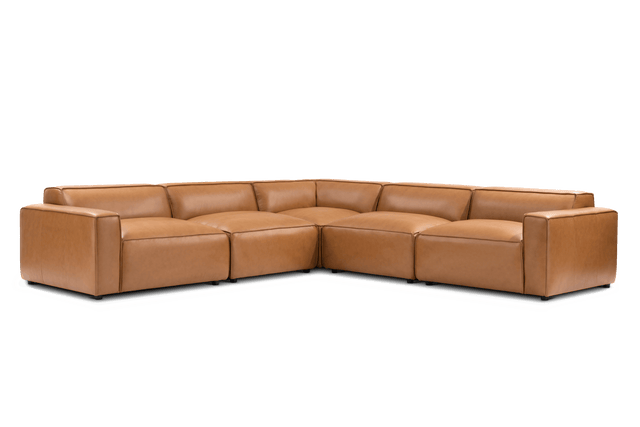
Frequently Asked Questions
Is a corner sofa the same as a sectional?
Effectively, yes — the terms describe the same category of furniture (an L- or U-shaped sofa with a corner). "Sectional" is the dominant North American term; "corner sofa" is more common in the UK and Europe. The more meaningful distinction is between fixed-frame and modular construction, not between the names.
Can a corner sofa be reassembled if I move?
Fixed corner sofas typically cannot be disassembled beyond what the manufacturer intended — which is often limited to separating two or three sections for moving purposes. True reconfiguration (flipping orientation, adding sections) requires a modular design. If you anticipate moving or redecorating, prioritize modular construction.
What does "left-facing" vs "right-facing" mean on a sectional?
It refers to the direction the chaise or return section faces when you are seated on the sofa and looking forward. "Left-facing" means the chaise extends to your left. Stand in your room, face the wall where the sofa will go, and decide which direction the chaise should extend — then match that to the product's orientation specification before ordering.
How do I prevent sectional sections from sliding apart?
Look for a design that includes metal connectors or coupling brackets under the sections. If your sectional uses adjacent-placement without hardware, aftermarket sectional connectors (available at furniture stores) can be installed. A non-slip rug under the sectional also reduces floor-level movement on hard surfaces.
What size room do I need for a corner sofa?
For an L-shape, plan for a minimum room size of 10 × 12 feet to maintain adequate clearance. Use painter's tape to mark the footprint before purchasing — it's the most reliable way to visualize the actual floor space required without committing to the purchase first.
Can I add a matching piece to my corner sofa later?
Only if the manufacturer sells additional compatible units. Modular systems are specifically designed for this — you can add armless chairs, corner wedges, or chaise sections from the same range. Fixed corner sofas generally cannot be extended because the frame is not designed to connect additional units, and matching upholstery from a later production run may differ slightly.