

In this article: How to choose the right leather sofa color for your room — matched to your walls, floors, and lighting conditions — so the piece works visually for years, not just the day it arrives.
- How Room Lighting Changes Every Color
- Matching Leather to Wall Color
- Matching Leather to Flooring
- Most Popular Leather Sofa Colors and When to Use Them
- Practical Factors: Pets, Kids, and Maintenance
- Frequently Asked Questions
Leather sofa color is one of the most permanent decisions in a living room. Unlike a rug or throw pillow that can be swapped seasonally, a leather sofa anchors the room's palette for 10–20 years. Getting the color right the first time means understanding how lighting, room scale, and your existing finishes interact — not just choosing a shade you like in a store.
This guide walks through the factors that determine whether a leather color works long-term: light quality, wall color relationships, flooring contrast, and practical household considerations.
Quick Takeaways
• Never choose leather color from a product photo alone.
Showroom lighting and photography conditions both distort how a leather color reads in a real room with your specific light sources.
• Contrast with your flooring creates visual grounding.
Dark wood floors with a medium-brown leather sofa creates a muddy sameness; light floors with dark leather or dark floors with lighter leather creates definition.
• Warm-toned leathers work with warm rooms; cool leathers with cool rooms.
Cognac and saddle brown read warm; charcoal and slate read cool. Mixing warm and cool tones across large pieces creates visual tension.
• White and cream leather show every mark but are the most design-flexible.
Works in almost any color scheme but requires consistent maintenance — weekly dusting, monthly cleaning.
• Dark leather hides everyday marks but shows dust clearly.
Black and espresso leather needs regular dusting; the trade-off is strong visual presence and high stain resistance.
1. How Room Lighting Changes Every Color

Leather color looks dramatically different under natural daylight versus warm incandescent versus cool LED lighting. This is the most common reason buyers are surprised when a sofa they loved in a showroom looks different at home.
North-facing rooms (cool, indirect light)
Natural light is bluish and flat. Warm-toned leathers — cognac, caramel, honey brown — help counterbalance the cool light and prevent the room from feeling cold. Cool grays and slate blues may look unexpectedly muted or dull in north-facing rooms.
South-facing rooms (bright, warm light)
Sunlight is warm and direct. Almost any leather color works, but very light and very dark shades can look washed out or harsh in intense sun. Medium-toned leathers — tan, saddle, walnut — tend to look their best in rooms with strong natural light.
Rooms with warm artificial light
Incandescent and warm-white LED bulbs make cognac and brown leathers glow beautifully. The same light can make gray and cool-toned leathers look slightly greenish. If your room relies on warm artificial light in the evenings, lean toward warm leather tones.
How to test before buying
Request a leather swatch (or ask the retailer to send one) and live with it in your room for 24–48 hours across different times of day. This one step prevents the most common leather color purchasing error.
2. Matching Leather to Wall Color

White and off-white walls
The most flexible pairing. White walls work with virtually any leather color — which is why they're the most common living room backdrop. If your walls are crisp white, the leather becomes the dominant color statement, so choose a shade you can commit to for the next decade.
Gray walls
Cool grays pair well with charcoal, black, and slate leather. For a warmer result with gray walls, introduce cognac or tan leather with warm-toned accent pieces. Avoid warm-brown leather on blue-gray walls — the undertone conflict can make both look off.
Beige and warm neutral walls
Most common in traditional and transitional interiors. Cognac, saddle, and honey brown leather work naturally because they share the warm undertone. Off-white and cream leather creates an elegant tonal look that keeps the room feeling light.
Bold wall colors (navy, sage, terracotta)
Dark walls with dark leather creates a dramatic, enveloping feel — intentional in media rooms and home theaters. For a more balanced result, pair a bold wall color with a contrasting leather: navy walls with cognac leather, sage walls with tan or natural leather, terracotta walls with black or dark espresso leather.
3. Matching Leather to Flooring
Flooring is the second largest visual surface in any room. A leather sofa that clashes with the floor creates visual noise that no accent piece can resolve.
Dark wood floors
Avoid medium brown leather directly on dark walnut or espresso floors — the colors merge into a monotone zone that makes furniture and floor indistinguishable. Use contrast: light tan, cream, or cognac leather creates clear visual separation. Black leather works on dark floors if there's enough contrast between the leather's cool tone and the floor's warm tone.
Light or blonde wood floors
Light floors are the most forgiving — they create natural contrast with almost any leather color. Dark espresso and black leather look particularly striking against light oak or maple. Medium browns work, but a rug between the two helps define the seating area.
Gray and concrete-look floors
Common in modern and contemporary interiors. Pair with charcoal, slate, or black leather for a cohesive look. Introduce cognac or caramel as an accent chair rather than the main sofa if you want to warm up a heavily gray room.
Carpet
If the carpet is patterned, choose a leather color that picks up a dominant color in the pattern. If the carpet is a solid neutral, the leather can be your bolder choice without risk of conflict.
4. Most Popular Leather Sofa Colors and When to Use Them
| Color | Tone | Best room situations | Practical notes |
|---|---|---|---|
| Black | Cool, dramatic | Modern rooms, home theaters, dark accent walls | Shows dust clearly; very easy to clean; hides most stains |
| Espresso / dark brown | Warm dark | Traditional, transitional, and contemporary interiors | Most forgiving color — hides marks, pairs with most decor styles |
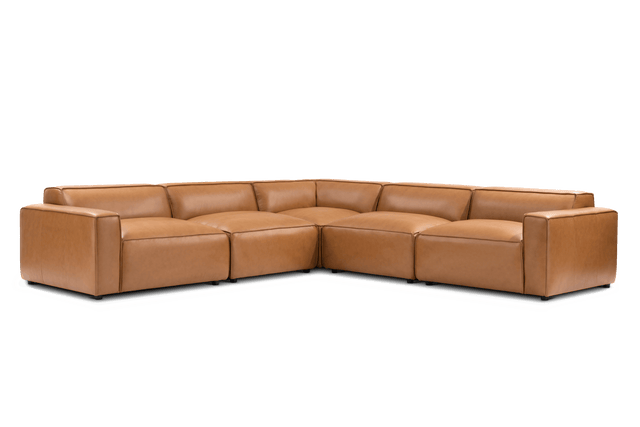
| Cognac / saddle brown | Warm medium | Warm-toned rooms, eclectic and mid-century interiors | Shows patina beautifully; warm light makes it glow |
| Tan / caramel | Warm light-medium | Light-filled rooms, Scandinavian and natural design styles | More visible everyday marks than darker shades; ages well |
| White / cream | Neutral cool-warm | Minimalist, Scandinavian, and coastal interiors | Most design-flexible; highest maintenance requirement |
| Gray / slate | Cool neutral | Modern and contemporary rooms with cool-toned palettes | Less common — verify the undertone in your specific room light |
5. Practical Factors: Pets, Kids, and Maintenance

Households with children
Medium to dark tones in espresso, saddle brown, or cognac are the most forgiving — they absorb visual marks and develop a patina rather than showing stains. Avoid white and cream for primary family room seating if the room sees daily child use.
Households with pets
Dark leather shows pet hair against light-colored animals (a golden retriever's hair on black leather is very visible). Consider a medium tone that approximates your pet's coat color if shedding is significant. More importantly, choose a protected or semi-aniline finish rather than a delicate aniline for pet households — scratch resistance matters more than color in this case.
High-use rooms
Living rooms that see 4+ hours of daily family use do best with darker, protected finishes. Not because lighter leathers can't be maintained — they can — but because the maintenance frequency required is higher, and the margin for error before visible marks appear is smaller.
Frequently Asked Questions
Does leather sofa color change over time?
Yes — genuine leather develops a patina over time, with high-contact areas (headrests, seat fronts, arm caps) deepening slightly in color and sheen. This is considered a desirable quality change in full grain and Italian Nappa leather. Protected and pigmented finishes patina more slowly; aniline leathers change most visibly. Fading from direct sunlight is a different process and is generally undesirable — keep leather out of prolonged direct sun.
Is dark or light leather easier to maintain?
Both require the same cleaning routine, but dark leather hides most everyday stains while showing dust and lint. Light and cream leather shows stains more readily but can be cleaned without visible watermarks as easily as dark leather if cleaned correctly. The finish matters more than the color: a protected finish on light leather is easier to maintain than an aniline finish on dark leather.
Can I change the color of my leather sofa?
Yes — leather dye and leather recoloring products exist and can significantly change the color of a finished leather sofa. Going darker is generally easier and more predictable than going lighter. Professional leather recoloring services produce the most consistent results. This is a realistic option for refreshing an older piece but requires professional execution to avoid blotchy or uneven results.
What leather color goes best with gray walls?
Charcoal and black leather create a tonal, modern look with gray walls. Cognac or warm brown leather introduces contrast and warmth that prevents the room from feeling cold — particularly effective in north-facing or poorly lit rooms. Avoid medium-warm browns with blue-gray walls, as the cool wall undertone and warm leather undertone create visual tension.
Is white leather a practical choice for a family room?
Yes, but it requires consistent care. White and cream leather in a family room requires weekly dusting and monthly cleaning — more frequently than darker leather in comparable use. Choose a protected (pigmented) finish rather than aniline for the best stain resistance on white leather. Denim transfer (blue-gray discoloration from jeans) is the most common challenge specific to white leather and is cleanable but requires a dye-transfer leather cleaner.
How do I test if a leather color will work in my room?
Request a leather swatch from the manufacturer or retailer and place it in your room for 24–48 hours, observing it at different times of day and under your actual lighting conditions — both daylight and evening artificial light. This is the most reliable method. If a swatch is unavailable, photograph your room and use a photo editing tool to overlay the leather color as a reference before committing.