

In this article: What Italian Nappa leather is, how it compares to full grain and top grain leather, and why the grade and finish you choose directly affect how your sofa looks and ages.
- What "Nappa" Actually Means
- Italian Nappa vs Full Grain vs Top Grain Leather
- How Leather Grade Affects Aging and Patina
- What Matters More Than the Grade Label
- A Buyer's Checklist for Leather Furniture
- Frequently Asked Questions
Italian Nappa leather is a term that combines origin — Italian tanneries — with a processing style that produces exceptionally soft, supple leather typically used in premium furniture and automotive interiors. Understanding what it means helps you compare sofas, sectionals, and recliners with confidence instead of relying on marketing language alone.

Leather grade labels — full grain, top grain, Nappa, bonded — are shorthand, not strict universal standards. Two "top grain" leathers can feel and perform very differently depending on the tannery, the finish, and how the hide was cut and processed. This guide explains what the terms actually mean and what to ask when you're shopping.
Quick Takeaways
• Nappa refers to processing style — not grade position.
Italian Nappa typically means full-grain or top-grain hide tanned in Italy using methods that produce exceptional softness.
• Full grain keeps the natural hide surface intact.
Most durable, develops the richest patina, and tends to have the highest price point for this reason.
• Top grain is real leather — refined for a consistent look.
Sanded or buffed surface removes natural markings; the result is more uniform and often easier to maintain.
• Bonded leather is a composite, not genuine hide.
Made from leather fibers and polyurethane binder — looks similar at first but typically shows peeling or flaking sooner in high-contact use.
• The finish type matters as much as the grade.
Aniline, semi-aniline, or pigmented finishes all behave differently — and that affects daily care more than the grade label alone.
1. What "Nappa" Actually Means

The word "Nappa" has 19th-century origins from tanneries in Napa, California — but in modern furniture and automotive use, it describes a style of finishing that produces an exceptionally soft, pliable hide. Italian Nappa takes this a step further: the hides are tanned and finished by Italian tanneries (particularly in regions like Tuscany) using traditional methods that emphasize natural softness, tight grain, and durability.
Why Italian tanning matters
Italian tanneries have centuries of accumulated knowledge. They use vegetable tanning processes (using plant tannins rather than synthetic chemicals) that produce leather which tends to breathe better, age more gracefully, and feel more natural against the skin. This is why "Italian leather" commands a premium — it often refers to a verifiable quality standard, not just a marketing term.
Where Italian Nappa appears in furniture
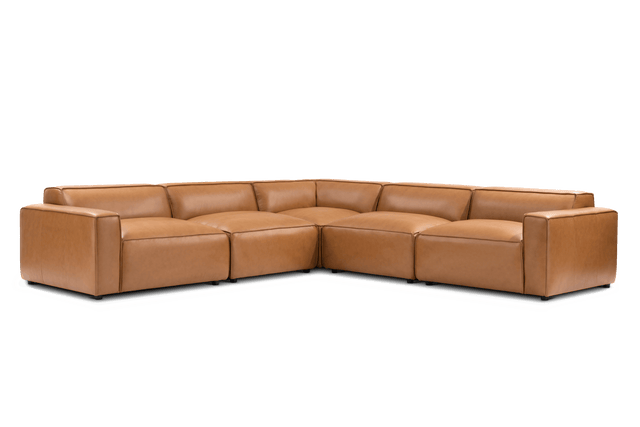
You'll see Italian Nappa leather specified most often in premium recliners, theater seating, and high-end sectionals where softness and drape are a deliberate design choice. The material is chosen for how it feels under extended contact — particularly in seating where you're reclined for 2–3 hours at a time.
2. Italian Nappa vs Full Grain vs Top Grain Leather

| Type | What it is | Feel and appearance | Aging and patina |
|---|---|---|---|
| Italian Nappa | Full grain or top grain hide tanned using Italian methods emphasizing softness | Very soft, supple, fine grain; high visual clarity | Develops a rich, refined patina; ages beautifully with use |
| Full Grain | Natural top layer of the hide with grain left completely intact | Textured, natural variation; may show surface markings | Most noticeable patina; deepens in color and sheen over time |
| Top Grain | Real leather with the surface lightly sanded/buffed for consistency | Smooth, uniform, consistent look across panels | Subtle patina; protective finish resists everyday wear better |
| Bonded Leather | Leather fibers mixed with polyurethane binder, applied to a backing | Uniform, plastic-like feel; no natural variation | Peeling and flaking in high-contact areas over time |
3. How Leather Grade Affects Aging and Patina

Patina is the gradual change in a leather's color, sheen, and texture that develops through regular contact and use. It's a sign of genuine hide — bonded leather doesn't develop patina; it deteriorates instead.
Full grain and Italian Nappa patina
Because the natural grain is intact (or only lightly refined), body oils, gentle friction, and time work together to deepen the color in high-contact areas — headrests, arm caps, seat fronts. This is considered desirable: it gives the sofa a lived-in richness that synthetic materials can't replicate.
Top grain patina
Top grain leather still develops patina, but the process is slower and more subtle because the surface has been refined and finished. The protective layer makes day-to-day care easier, which is why many buyers — especially in households with kids or pets — prefer top grain for living room seating.
When patina is not what you want
If you prefer leather that looks showroom-fresh for years and doesn't visibly change color in high-use zones, a heavily pigmented top grain finish is the better choice. Italian Nappa with a natural finish will visually evolve — that's part of its character.
4. What Matters More Than the Grade Label
Grade labels are a starting point. These four factors determine how a specific piece of leather furniture will actually perform in your home:
Finish type
• Aniline: completely natural, most breathable, most sensitive to spills and oils.
• Semi-aniline: lightly protected, balance of natural feel and stain resistance.
• Pigmented/protected: full topcoat, most durable for high-traffic use, easiest to clean.
Thickness and cut quality
Hides are typically thicker at the back and shoulders, thinner at the belly. Premium upholstery uses hides cut from the stronger sections for high-contact surfaces.
Tanning process and origin
Vegetable-tanned Italian leather tends to breathe better and age more gracefully. Chrome-tanned leathers (faster to produce) can also be high quality but behave differently in terms of elasticity and moisture response.
Upholstery construction
Even premium leather underperforms on a weak frame with poor stitching. The leather and the construction work together — one cannot compensate for the other.
5. A Buyer's Checklist for Leather Furniture
• Ask specifically whether the leather is genuine hide or a composite (bonded or PU).
• Confirm the leather origin and tanning method if Italian Nappa is specified — a genuine Italian-tanned hide has a paper trail.
• Ask what leather grade and finish is used on the highest-contact surfaces (seat, headrest, arm cap) — not just on the back panels.
• Assess the feel in person when possible: genuine Italian Nappa leather feels soft without being floppy, with a natural warmth to the touch.
• Consider your lifestyle: patina lovers typically choose full grain or Italian Nappa; those who prefer uniform looks and easier maintenance often do better with a protected top grain finish.
• Read the care requirements before purchasing — some aniline and natural leathers require more maintenance than their appearance might suggest.
Frequently Asked Questions
Is Italian Nappa leather the same as full grain leather?
Not always. Nappa is a processing style — it describes how the leather is prepared to achieve softness. It can be applied to full grain or top grain hides. When a manufacturer specifies "Italian Nappa," it typically refers to full-grain or high-quality top-grain leather tanned in Italy, but the exact grade should be confirmed in the product specifications.
How do I care for Italian Nappa leather furniture?
Dust weekly with a soft microfiber cloth, spot-clean monthly with a pH-balanced leather cleaner, and condition every 3–6 months with a conditioner formulated for the specific finish (aniline, semi-aniline, or pigmented). Keep the furniture away from direct sunlight and heat sources. Avoid alcohol-based products and all-purpose household cleaners.
Is Italian Nappa leather durable enough for everyday use?
Yes. Properly tanned Italian Nappa leather is designed for daily use in furniture applications. The key is selecting the right finish: pigmented or semi-aniline finishes are more resistant to everyday oils and spills than pure aniline. For busy households, a semi-aniline or protected finish in Italian Nappa delivers both the premium feel and practical durability.
How can I tell if furniture marketed as Italian Nappa is genuine?
Ask the manufacturer or retailer for the leather origin documentation and tannery certification. Genuine Italian-tanned hides often carry certifications from Italian tanning associations. You can also assess quality in person: Italian Nappa leather has a distinctive supple, warm feel and a fine, consistent grain. If it feels stiff, plasticky, or has a chemical smell, it's likely not genuine.
Does Italian Nappa leather scratch easily?
Some light surface scratches on soft Nappa leather can be gently buffed with a clean soft cloth and may blend into the surrounding grain. Deeper scratches depend on the finish: pigmented finishes have more topcoat protection; aniline finishes show marks more readily because they have minimal protective coating. This trade-off is part of the appeal for buyers who value natural character over uniformity.
What is the price range for genuine Italian Nappa leather furniture?
Genuine Italian Nappa leather sofas and sectionals typically start in the $1,500–$3,000 range for single pieces and can go considerably higher for full-grain, hand-finished configurations. Pricing below that range is often a signal that the leather is a lower grade, a composite material, or was not tanned in Italy — regardless of how it's described in marketing materials.