

In this article: A practical comparison of platform beds, upholstered beds, and storage bed frames — with guidance on sizing, materials, and which type suits your bedroom best.
- Platform Bed Frames
- Upholstered Bed Frames
- Storage Bed Frames
- Bed Frame Size Guide
- Material Durability Compared
- Frequently Asked Questions
The bed frame is the single most visible piece of furniture in a bedroom, yet most buyers focus almost entirely on the mattress and treat the frame as an afterthought. The right frame affects sleep comfort, bedroom aesthetics, storage capacity, and how long your mattress investment lasts. This guide compares the three main types — platform, upholstered, and storage — so you can choose with confidence.

Quick Takeaways
• Platform beds eliminate the need for a box spring.
Their solid or slatted base supports the mattress directly, saving cost and reducing overall bed height.
• Upholstered frames add softness and visual warmth.
Fabric or leather headboards soften the room acoustically and aesthetically, and they are forgiving on bumped heads.
• Storage beds maximize floor space efficiency.
Under-bed drawers or hydraulic lift bases can replace or supplement a wardrobe in smaller bedrooms.
• Frame material determines long-term durability.
Solid hardwood outlasts MDF and particle board by years; steel frames are extremely durable but offer less aesthetic flexibility.
• Measure ceiling height before buying tall headboards.
Upholstered frames with high headboards can look disproportionate in rooms with ceilings under 8 feet.
1. Platform Bed Frames

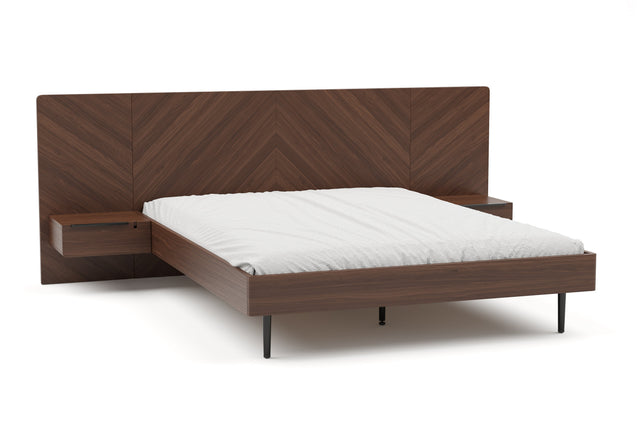
Platform beds have a low-profile base — either a solid panel or evenly spaced wooden slats — that supports the mattress without a box spring. They originated in Japanese and Scandinavian design traditions and have become the dominant style in contemporary bedroom furniture.
Pros of platform beds:
• No box spring required — the slat or solid base provides direct mattress support, saving $100–$400.
• Lower overall height (typically 14–18 inches from floor to mattress top) gives a clean, modern aesthetic and suits rooms with lower ceilings.
• Excellent slat ventilation reduces moisture buildup under the mattress, which extends mattress life.
• Available in a wide range of materials — solid wood, engineered wood, metal, and upholstered variants all use platform-style bases.
Cons of platform beds:
• Lower height can make getting in and out of bed harder for elderly users or those with mobility issues.
• Limited under-bed storage space due to low clearance — typically 7–12 inches, compared to 16–24 inches on a standard bed frame.
• Some platform frames are not compatible with memory foam mattresses if the slat spacing exceeds 3 inches — check before purchasing.
2. Upholstered Bed Frames

Upholstered bed frames are covered in fabric, velvet, or leather and typically feature a padded headboard — and sometimes a padded footboard — as their defining design element. The headboard is the focal point of the bedroom and serves a practical purpose: it cushions your back when sitting up to read and prevents pillows from falling behind the bed.
Pros of upholstered beds:
• Visually soften the bedroom — fabric and leather absorb sound and reduce echo, which improves room acoustics.
• Comfortable headboard for reading or watching television in bed without additional pillows as backrest support.
• Wide design range — from button-tufted to panel to wing-style — suits traditional, transitional, and contemporary interiors.
• Available in neutral tones that adapt to multiple décor changes without the frame becoming dated.
Cons of upholstered beds:
• Fabric headboards collect dust and pet hair; require regular vacuuming and occasional spot cleaning.
• Light-colored upholstery shows stains from contact with oily hair, food, or beverages.
• Leather or faux leather options cost more than comparable fabric finishes.
• Tall headboards (40 inches and over) can look out of scale in rooms with 7.5-foot ceilings — measure before choosing headboard height.
3. Storage Bed Frames

Storage bed frames build usable storage directly into the base of the bed, making them one of the most space-efficient pieces of furniture available. There are two main storage configurations: side drawers and hydraulic lift.
Side-drawer storage beds have built-in drawers on one or both sides of the base. These are accessible without moving the mattress, making them practical for everyday items like bedding, clothing, or books. The number of drawers varies from two (one per side) to four or more on larger king frames.
Hydraulic-lift storage beds have a gas-piston mechanism that lifts the entire mattress platform to reveal a large open storage area beneath the full footprint of the bed. This maximizes storage volume — a king-size hydraulic lift can hold the equivalent of a full wardrobe section — but access requires lifting the mattress, making it better for seasonal or occasional-use items.
Pros of storage beds:
• Dramatically increase bedroom storage capacity without additional furniture.
• Ideal for smaller bedrooms and apartments where floor space is at a premium.
• Hydraulic lift models offer the largest accessible storage volume of any household furniture category per square foot.
• Side-drawer designs allow daily access without disrupting the bed setup.
Cons of storage beds:
• Heavier and harder to move than non-storage frames — delivery and room placement must be planned in advance.
• Hydraulic mechanisms require periodic maintenance; gas pistons can weaken over years of use.
• Higher base height means overall bed height is taller than low-profile platform options — typically 22–26 inches from floor to mattress top.
• Storage area must be kept dry; under-bed moisture is a concern in humid climates without proper ventilation.
4. Bed Frame Size Guide
Choosing the right mattress size is a separate decision from choosing the right frame type, but they are made simultaneously. The frame must match the mattress size exactly — there is no standard adaptation between sizes.
Standard bed sizes (US):
• Twin: 38 x 75 inches — suitable for children, single adults in small rooms, or bunk configurations.
• Twin XL: 38 x 80 inches — same width as a twin but 5 inches longer; common in college dormitories.
• Full / Double: 54 x 75 inches — suitable for a single adult who wants extra space, or a couple in a smaller room.
• Queen: 60 x 80 inches — the most popular size in the US; suits most master bedrooms and couples.
• King: 76 x 80 inches — best for couples who need maximum sleeping space; requires a room at least 12 feet wide to leave adequate clearance on both sides.
• California King: 72 x 84 inches — narrower and longer than a standard king; better for taller sleepers in long, narrow rooms.
For the room to feel balanced with a queen frame, allow at least 24 inches of clearance on each side of the bed and at least 30 inches at the foot for walking access. A king frame in a room smaller than 12 x 12 feet will feel crowded regardless of the frame type.
5. Material Durability Compared
The material a bed frame is made from determines how long it lasts, how much it weighs, and how it looks after years of use.
Solid hardwood (oak, walnut, maple): the most durable option. Solid hardwood frames resist warping, hold screws and joints securely over time, and can be refinished if scratched. They are heavier than other materials and cost more, but their lifespan typically exceeds 20 years.
Engineered wood (MDF, plywood, particle board): lower cost than solid hardwood and suitable for upholstered frames where the wood is not exposed. MDF holds paint and fabric well but is susceptible to moisture swelling at joints, and screw holes can strip over repeated assembly. Most well-constructed engineered wood frames last 8–12 years with normal use.
Steel and metal: extremely durable, resistant to insects and moisture, and available at lower price points than solid wood. Metal frames are lighter than wood for equivalent strength and can flex slightly — which some sleepers find creates noise. Platform metal frames with grid slat systems are among the most reliable bases for heavy mattresses.
Upholstered fabric and leather: the outer material of upholstered frames (not the structural base) determines how the surface ages. Top-grain leather and performance fabrics (solution-dyed acrylic, tightly woven polyester) resist staining and wear better than natural linen or cotton blends. Velvet is visually luxurious but requires more maintenance to keep looking clean.
Frequently Asked Questions
Do platform beds require a box spring?
No. Platform beds are specifically designed to support a mattress directly without a box spring. The solid or slatted platform provides the necessary support. Adding a box spring to a platform frame is unnecessary and raises the bed height significantly beyond its intended design.
What is the best bed frame material for durability?
Solid hardwood is the most durable bed frame material for long-term use. It resists warping and maintains its structural integrity over decades. Structural steel is equally durable and more affordable, though it offers less design variety. Both significantly outlast engineered wood and MDF-based frames.
How do I stop my bed frame from squeaking?
Squeaking usually comes from loose joints, metal-on-metal contact at the rail connections, or the mattress rubbing against the frame. Tighten all bolts and screws first. Add felt pads or rubber washers at metal joint points. If the slats squeak, place a thin fabric or rubber liner between the slats and the frame rail. Most squeaking in new frames resolves within the first few weeks as the joinery settles.
Can an upholstered bed frame be cleaned?
Yes. Fabric upholstered headboards should be vacuumed monthly using an upholstery attachment to remove dust and debris. Spot-clean stains immediately with a mild upholstery cleaner and a clean cloth, blotting rather than rubbing. Leather and faux leather surfaces can be wiped with a damp cloth and conditioned periodically. Avoid steam cleaning fabric headboards as it can cause shrinkage or watermarking.
How much weight can a storage bed hold?
Most storage bed frames are rated for the same total weight as standard frames — typically 500–800 pounds for a queen when considering the combined weight of mattress, bedding, and occupants. The storage compartments themselves are generally not weight-rated for heavy items; use them for lighter goods like bedding, clothing, and pillows rather than books or dense items.
What size bed frame should I get for a 10x10 bedroom?
A 10x10 room (100 square feet) can fit a twin or full/double bed frame and still maintain adequate clearance. A queen frame (60 x 80 inches plus the frame overhang) will fit physically but will leave less than 18 inches of clearance on each side — less than the recommended 24 inches. In a 10x10 room, a full/double is the optimal choice for both comfort and usable floor space.
Is a hydraulic lift storage bed difficult to use daily?
Hydraulic lift frames use gas pistons that make lifting the mattress base easy — typically requiring around 15–20 pounds of lift force despite supporting a heavy mattress. However, you do need to remove bedding before accessing the storage, which makes it impractical for daily retrieval. It is best suited to seasonal or occasional-use storage rather than items you need every day.