

In this article: Five sofa arrangements specifically designed for small living rooms — covering layout logic, furniture sizing, and the spatial rules that make each one work.
- The Float: Sofa in the Centre
- The Wall-Hugger: One Wall, One Sofa
- The Corner Anchor: L-Shape That Defines a Zone
- The Parallel: Two Pieces Facing Each Other
- The Diagonal: Angled for Openness
- Frequently Asked Questions
A small living room does not need to feel small — it needs the right furniture plan. The sofa is typically the largest piece in the room, which means how you position it determines how every other element fits, how traffic flows, and how much of the floor remains visible. Visible floor equals perceived space.
The five arrangements below address the most common small living room configurations — from square rooms to long narrow ones — with specific guidance on sofa sizing and what furniture to pair each layout with.
Quick Takeaways
• Visible floor is perceived space.
Any arrangement that keeps floor visible around the sofa's legs makes the room feel larger than one where the sofa is flush to every surface.
• Scale matters more than style.
An oversized sofa in any arrangement will overwhelm a small room. Right-size the frame first, then choose the configuration.
• Traffic lanes need 36 inches minimum.
Every arrangement should allow a clear 36-inch walking path from entry to key destinations — windows, kitchen, bedrooms.
1. The Float: Sofa in the Centre

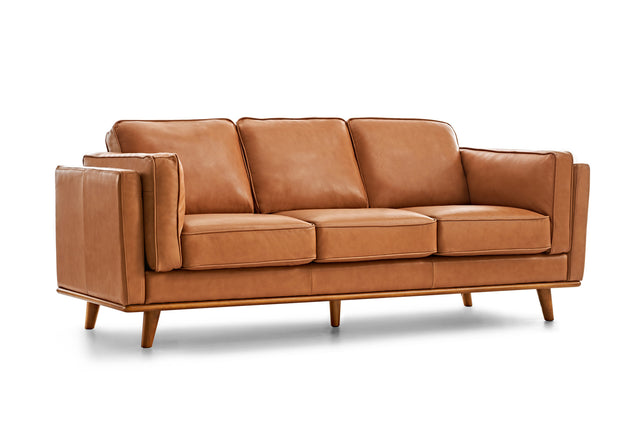
Pulling the sofa away from all walls and placing it centrally in the room — even by just 12 to 18 inches — is counterintuitive in a small space but often dramatically more effective than pushing it against the wall. When the sofa is against the wall, traffic has to route around it awkwardly, and the room divides into a furniture zone and a dead zone.
When it works
The float works best in square or near-square rooms where no single wall is dramatically longer than the others. It requires a compact sofa — a two-seater or a tight three-seater no longer than 220 cm — that does not consume the entire centre of the room when floated. The sofa's back becomes a visual room divider, which is useful in open-plan studios.
How to execute it
• Float the sofa 16–24 inches from the wall behind it rather than against it.
• Use a console table or narrow sideboard directly behind the sofa to use that gap productively.
• A round or oval coffee table works better than rectangular in this arrangement — it allows easier circulation around the seating group.
• Keep the area rug generous — it should extend at least 18 inches beyond the sofa on each side to ground the floating arrangement.
2. The Wall-Hugger: One Wall, One Sofa

Placing the sofa along the longest available wall is the most intuitive small-room strategy — and when executed correctly, it remains one of the most effective. The key is maintaining enough floor clearance in front of the sofa to prevent the layout from reading as a narrow corridor.
When it works
The wall-hugger is best suited to long, narrow rooms where floating the sofa would leave the room feeling even more elongated. By anchoring the sofa along the length, you create a clear seating zone opposite the room's primary feature — a fireplace, a television, or a window with a view.
How to execute it
• Leave at least 18 inches between the sofa and any wall running parallel to it — enough for a side table and lamp without feeling squeezed.
• Keep the coffee table at 16–18 inches from the sofa edge — close enough to reach without leaning, far enough that people can pass in front of it.
• Use tall, vertical accessories (a floor lamp, a tall plant, a wall-mounted shelf) behind or beside the sofa to draw the eye up and counteract the horizontal emphasis of the wall-hugging layout.
• Avoid placing anything blocking the view line from sofa to the room's focal point — an open sight line is what makes this layout feel considered rather than forced.
3. The Corner Anchor: L-Shape That Defines a Zone

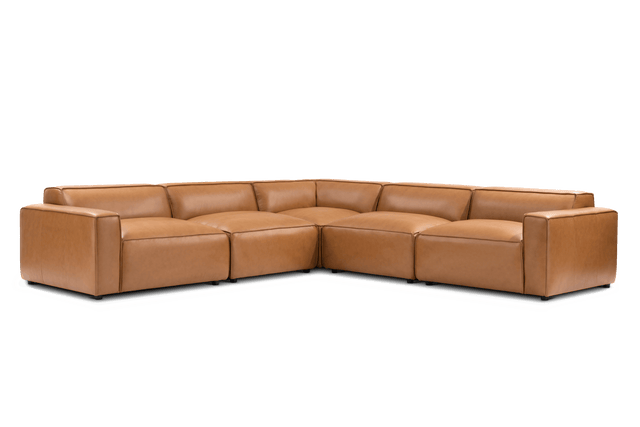
A compact L-shaped sectional or corner sofa configuration is one of the most space-efficient arrangements available. By occupying two walls simultaneously, it maximises seating capacity while leaving the entire opposite corner of the room open. In a small room, this open corner is invaluable — it gives the eye somewhere to rest and prevents the sofa from dominating the visual field from all angles.
When it works
Corner anchor works best in square rooms or rooms with an obvious corner that is currently wasted. It requires a modular or L-shaped sofa specifically designed for corner placement rather than a standard straight sofa pushed awkwardly into a corner. The configuration works particularly well in open-plan spaces where the sofa needs to define the living zone without a physical wall to back up to.
How to execute it
• Measure the corner precisely — allow 2–3 inches of clearance on each side wall so the sofa does not look jammed in.
• Use a small, low-profile coffee table or nested tables rather than a standard-sized one — the L-shape already defines the seating zone and does not need additional space division.
• Run the area rug across the full footprint of the sofa to visually unify the two-piece shape.
• Keep the opposite corner of the room entirely clear of large furniture — that negative space is what makes the corner anchor arrangement work.
4. The Parallel: Two Pieces Facing Each Other
Instead of one large sofa, this arrangement uses two smaller pieces — a love seat and a compact two-seater, or two matching love seats — placed directly opposite each other across a shared coffee table. The parallel arrangement creates an intimate, conversation-centred seating layout that feels curated rather than furniture-store-default.
When it works
Parallel seating works best in rooms used primarily for conversation — dinner party overflow, reading rooms, formal sitting rooms — rather than television-focused family rooms. It requires enough room width to place two pieces facing each other with at least 36 inches of walking clearance between them; in a very narrow room, two pieces facing each other may leave no usable traffic path.
How to execute it
• Use two identically sized pieces for visual symmetry, or size them so the smaller piece is on the window side where natural light compensates for its visual weight.
• Keep the coffee table between them at 18 inches maximum width — wider tables start to push the sofas apart and break the conversational intimacy of the arrangement.
• A matching pair of table lamps — one on each side — emphasises the symmetry and prevents one sofa from looking heavier than the other.
• Use a rectangular area rug that is long enough to run under the front legs of both pieces simultaneously to bind them visually.
5. The Diagonal: Angled for Openness
Placing the sofa at a 45-degree angle to the room's walls is the most architecturally daring of the five arrangements — and when it works, it is transformative. The diagonal cuts across the room's rigid rectangular geometry, creating the illusion of greater depth and opening multiple sight lines simultaneously.
When it works
Diagonal placement works best in square rooms where straight-on arrangements make the sofa feel too parallel to all walls. It also works well in rooms with an awkward angled wall or bay window that disrupts standard placement. A compact two-seater or love seat — no longer than 200 cm — is far easier to angle than a long three-seater, which may block too many door and window openings when positioned diagonally.
How to execute it
• Position the sofa at true 45 degrees so the diagonal reads as intentional rather than accidentally shifted.
• Use the triangular space behind the sofa (the corner it now points away from) for a tall floor lamp or a large plant — it would otherwise be wasted dead space.
• The coffee table should also be angled or use a round table — a straight rectangular table in front of a diagonal sofa reintroduces the rectangular rigidity the diagonal was meant to break.
• A round area rug works better than a rectangular one here — it does not conflict with the sofa's angle and keeps the floor treatment soft and flexible.
Frequently Asked Questions
What is the minimum room size for a sofa and coffee table?
A workable living room setup — sofa, coffee table, and one walkable traffic lane — requires a minimum floor area of roughly 10 feet by 12 feet (approximately 3 by 3.7 metres). Below that, you are choosing between a sofa and a coffee table, not both. In rooms smaller than this, ottomans on casters function better than a fixed coffee table because they can be moved to create more floor space as needed.
Should a sofa always face the television?
No — and in a small room, forcing the sofa to face the television often produces the worst possible layout. If the television is on a short wall but the long wall is more suitable for the sofa, move the television rather than contorting the furniture plan. A television mounted on an articulating arm can rotate to face any seating position, giving you much more flexibility in arrangement. The sofa's primary relationship should be to the room's natural social focal point — which may not be a screen.
How do I choose between a sectional and a straight sofa for a small room?
A compact modular corner sectional often uses floor space more efficiently than a straight sofa plus additional seating pieces. If your room has a usable corner, a well-proportioned L-shape can seat more people while keeping more of the room's centre open than a straight three-seater with flanking armchairs. The key is choosing a sectional proportioned to the room — standard deep sectionals designed for large rooms will overwhelm a small space even when arranged well.
What is the ideal sofa depth for a small living room?
For a small room, look for sofas with a seat depth of 20–22 inches and a total frame depth of 33–37 inches. Deeper sofas — 40 inches and beyond — require more floor clearance in front of them to remain comfortable and reduce the usable centre of the room significantly. Shallow-depth sofas often have firmer, more upright cushions; if you prefer a reclined, lounging position, a deep sofa in a small room requires the floating arrangement to compensate for the depth.
How do I prevent a small living room from feeling dark with a dark sofa?
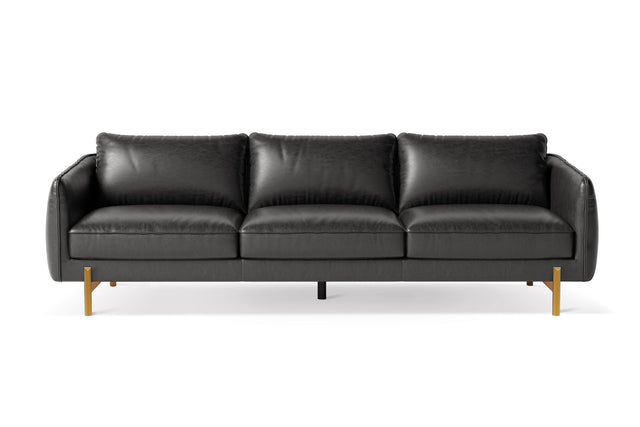
Keep everything else light. Pale walls, a light-toned rug, and a bright or reflective coffee table (glass, lacquer, or light marble) compensate for the visual weight of a dark sofa. Introduce layered lighting — an overhead fixture plus two floor or table lamps positioned to wash the walls with light — which makes the room feel larger regardless of sofa colour. A dark sofa in a well-lit pale room reads as a deliberate anchor piece rather than a room-darkening error.
Can an open-plan small apartment use multiple seating areas?
In most small open-plan apartments, a single well-considered seating arrangement reads better than two competing groups. A corner sectional with the sofa's back to the kitchen creates a defined zone without walls, which is usually more effective than dividing the open plan into two smaller, underpowered seating areas. Reserve a second seating group for studios or apartments larger than 600 square feet where there is genuinely enough room for both groups to breathe.
Does sofa leg height affect how large a room feels?
Yes — visibly raised legs allow light and sight lines to pass beneath the sofa, which reads as more space. A sofa on a 6-inch tapered leg shows 5–6 inches of floor beneath it; a skirted sofa or one sitting directly on the floor blocks that zone entirely. In a small room, this matters. Exposed-leg sofas consistently make small rooms feel more open than skirted ones, all else being equal.
How large should a rug be relative to the sofa in a small room?
Use the largest rug that fits the room rather than the smallest one that covers the sofa footprint. In a small living room, a too-small rug (one that only partially covers the area in front of the sofa) makes the sofa look disconnected and actually makes the room feel smaller, not larger. The front two legs of the sofa should sit on the rug at minimum; ideally, the rug extends at least 18 inches beyond each side of the sofa. When in doubt, go one rug size larger than you think you need.


