

In this article: A practical step-by-step guide to measuring your living room so you choose a sofa that fits perfectly the first time.
- How to Measure Your Room
- Measuring Doorways, Hallways & Delivery Paths
- Standard Sofa Dimensions Explained
- Leaving Proper Walking Clearance
- Scale, Proportion & Common Mistakes
- Frequently Asked Questions
Buying a sofa without measuring first is one of the most common — and costly — furniture mistakes you can make. Getting the measurements right means your new sofa will fit through the door, suit the room’s proportions, and leave enough space for comfortable movement. This guide walks you through every measurement that matters.

Quick Takeaways
• Measure twice, order once.
Record your room dimensions, doorway widths, and hallway lengths before you browse a single product page.
• Standard sofas run 72–96 inches wide.
Loveseats are 52–72 inches; sectionals typically exceed 100 inches on the longest side.
• Leave at least 36 inches of walking clearance.
That is the standard passage width that keeps traffic flow comfortable around furniture.
• Check delivery access before you buy.
A sofa that fits the room but cannot get through the front door or stairwell is a wasted purchase.
• Scale matters as much as size.
A sofa that is technically correct in dimensions can still look wrong if the legs, arms, or back height are out of proportion with the room.
1. How to Measure Your Room

Start with a steel tape measure — fabric tapes stretch and give inaccurate readings on long runs. Measure the full length and width of the room from wall to wall, then note any architectural features that will affect furniture placement: fireplaces, built-in shelving, radiators, window sills that extend into the floor area, and doorways that swing inward.
Sketch a rough floor plan on paper and mark every feature with its distance from the nearest corner. Once you have the room dimensions, identify where the sofa will sit. Measure that specific zone: the available length along the wall it will back onto, the depth you can afford before the room feels crowded, and the distance to the nearest focal point — television, fireplace, or window — that you want it to face.
As a general planning rule, a sofa facing a television should sit between 7 and 12 feet away for comfortable viewing. Sofas positioned in the center of a room need clearance on all sides, so measure in every direction from the intended footprint.
2. Measuring Doorways, Hallways & Delivery Paths

The delivery path is where most sofa purchases go wrong. Measure every point the sofa must pass through to reach its final position: the front door, any interior doorways, hallways, stairwells, and landings. Record both the width and the height at each chokepoint, because tall sofas can fail on height even when width is fine.
Key measurements to take:
• Door width: measure the clear opening between door stops, not the frame itself.
• Door height: measure from floor to the top of the door stop.
• Hallway width: measure at the tightest point, which is often where a radiator, light switch, or architectural trim reduces clearance.
• Stairwell: measure the width and the diagonal clearance — the vertical distance from the outer edge of the stair tread to the underside of the floor or ceiling above.
• Elevator interior (for apartments): measure all three interior dimensions including ceiling height, as sofas are often stood on end to fit.
When in doubt, contact the retailer before ordering. Most furniture brands can tell you whether a specific model ships in multiple pieces or can be disassembled for delivery.
3. Standard Sofa Dimensions Explained

Understanding standard size ranges lets you quickly narrow the field before measuring specific models. You can cross-check these against the live dimensions on any Valencia sofa or sectional product page.
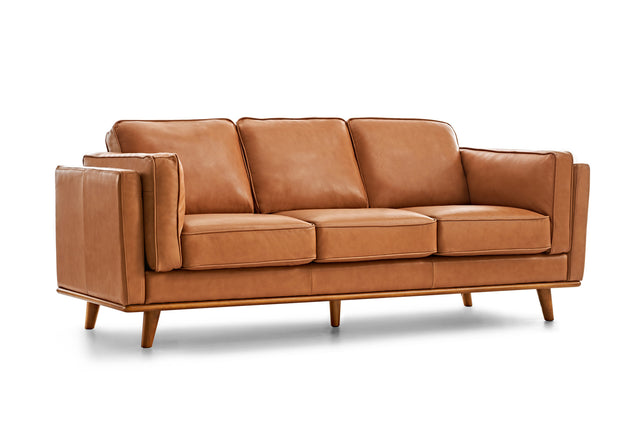
Loveseats (2-seat sofas): 52–72 inches wide. Suitable for rooms under 150 square feet, studio apartments, or as secondary seating alongside a larger sofa.
Standard sofas (2.5 to 3 seats): 72–96 inches wide. The most versatile size range and the best fit for average living rooms of 150–300 square feet.
Large sofas (3.5 seats and over): 90–110 inches wide. Best suited to rooms of 300 square feet or more where there is enough depth to prevent the sofa from dominating the entire space.
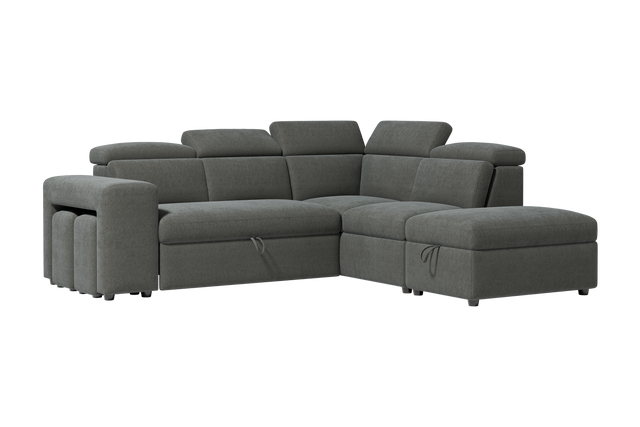
Sectionals: typically 100–140 inches on the longest side with a return arm of 60–90 inches. Sectionals suit open-plan spaces and rooms where you want to define a seating zone without walls doing the work.
Seat depth — the distance from the front of the cushion to the back cushion — ranges from about 19 inches (firm, upright seating) to 26 inches or more (deep, lounge-style seating). Taller people or those who prefer reclining while seated typically prefer 22 inches or deeper.
Back height runs from around 30 inches for low-profile contemporary sofas to 38 inches or more for traditional styles. Rooms with low ceilings benefit from lower-backed sofas that keep sightlines open.
4. Leaving Proper Walking Clearance
Clearance is the space between the edge of the sofa and any wall, other furniture, or fixed feature. Insufficient clearance makes a room feel cramped and creates a safety hazard — especially around doorways and high-traffic paths.
Standard clearance guidelines:
• Main traffic paths: at least 36 inches. This is the ADA-recommended passage width and the minimum for comfortable two-person passing.
• Secondary paths (edge of room, behind sofa): 24–30 inches.
• In front of a television or fireplace: leave enough room to seat occupants comfortably at the viewing distance you want, typically 7–10 feet.
• Coffee table clearance: 14–18 inches between the sofa’s front edge and the nearest coffee table edge. This leaves enough space to reach forward comfortably without being so far that you must lean awkwardly.
• Side table access: at least 6 inches beside an arm to place and retrieve items without stretching.
If your room is small, prioritize the main traffic path over secondary ones. A sofa placed closer to the wall behind it gives more open floor space in front — which is where clearance matters most for daily living.
5. Scale, Proportion & Common Mistakes
Dimensions tell you whether a sofa will fit. Proportion tells you whether it will look right. A sofa that fills 80 percent or more of a wall tends to feel oppressive regardless of whether there is technically enough clearance on either side. A sofa that occupies less than half the available wall space may look undersized and disconnected from the rest of the room’s furniture.
The most effective proportional guideline is the two-thirds rule: the sofa should be roughly two-thirds the length of the wall it sits against, or two-thirds the length of the primary rug beneath it. If you are placing a sectional without a wall behind it, it should define the seating zone clearly without spilling into the adjacent space used for circulation or dining.
Common measurement mistakes to avoid:
• Measuring the room but forgetting the delivery path — the leading cause of returns.
• Confusing overall width with seating width — arm styles vary enormously and wide rolled arms can reduce seating space by 8–12 inches per side.
• Ignoring seat height — standard seat height is 17–19 inches, but lower contemporary sofas sit at 14–16 inches. This matters for elderly users or anyone with mobility considerations.
• Not accounting for recliners — a reclining sofa or sectional needs an additional 12–18 inches behind the back when fully reclined.
• Buying for the empty room — factor in all other furniture that will share the space, not just the walls.
Related Guides
Once your measurements are locked in, go deeper: our small living room layout guide covers space-saving arrangements, the sofa bed buying guide helps if you need dual-purpose seating, and you can browse the full range of Valencia sofas & sectionals to match a model to your dimensions.
Frequently Asked Questions
How much space should I leave between the sofa and the wall?
For the main traffic path beside or in front of a sofa, leave a minimum of 36 inches. If the sofa backs against a wall with no walkway behind it, even 2–3 inches of clearance is fine — enough to allow cleaning and prevent moisture buildup.
What is the standard depth of a sofa?
Most sofas range from 32 to 40 inches in overall depth (front leg to back leg). Seat depth — the usable cushion depth — is typically 19–26 inches. Deep-seat sofas (24 inches or more) are more casual and lounge-friendly; shallower seats encourage upright posture.
What size sofa fits in a 12x12 living room?
A 12x12 room (144 square feet) suits a loveseat or a compact sofa of up to 72–78 inches wide. Placing a full-size 3-seater in a room this size is possible but leaves very little clearance, and a sectional would overwhelm the space entirely.
How do I measure if a sofa will fit through my door?
Measure the clear door opening width and height (between the stops, not the frame). Then check the sofa’s height and depth — when tipped on its back or end, one of those dimensions must be narrower than the door opening. Also check the hallway width and any turning radius required to maneuver from hall into room.
How do I choose between a sofa and a sectional for my room?
Sectionals work best in open-plan spaces or rooms larger than 250 square feet where you want to define a seating zone. They also provide more total seating. A standard sofa is the better choice in smaller rooms, formal layouts, or spaces where you need to keep sightlines and floor area open.
What is the best sofa size for a large living room?
In a large room (300+ square feet), a sofa smaller than 90 inches wide will often look undersized and fail to anchor the space. Consider a large 3.5-seater, a wide sectional, or a sofa-and-loveseat combination arranged facing each other across a coffee table to fill the room proportionally.
Should I measure the sofa or the room first?
Always measure the room first. This tells you the maximum dimensions you can accommodate and the proportional range that will look right. Then use those parameters to filter your product search rather than falling in love with a specific sofa and hoping it fits.
